
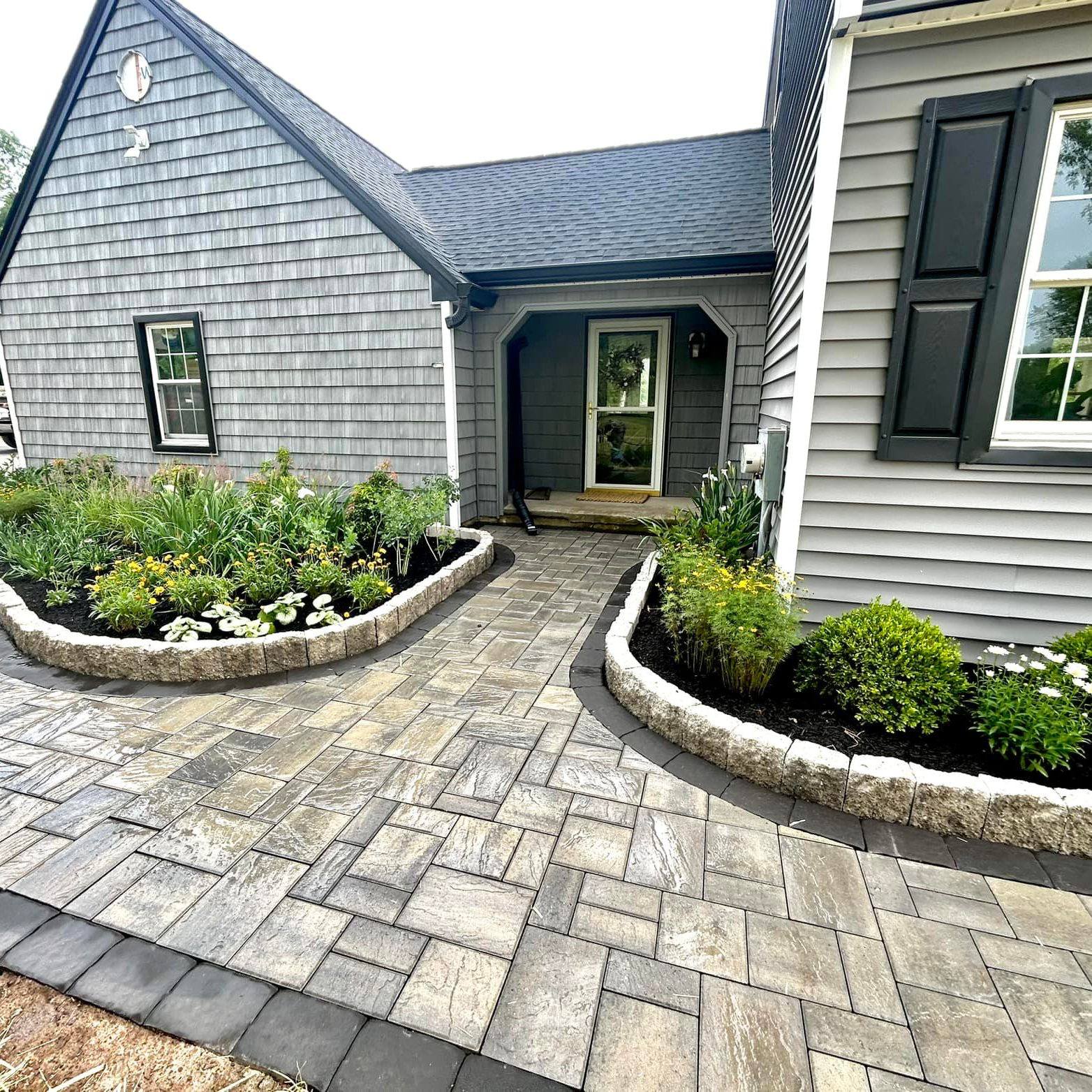
A lot of homeowners with sloped properties just accept the slope. They mow around it, plant some ground cover, and try not to think too hard about the erosion happening every time it rains. It's one of those problems that feels too big to tackle, so it gets pushed to the back of the list year after year.
Here's the thing: a properly built retaining wall doesn't just solve the erosion problem. It transforms the property. It creates usable space where there was none, protects your foundation, and adds genuine curb appeal and resale value. It's one of the highest-return hardscape investments you can make, and we've seen it change properties across Bucks County and Montgomery County completely.
What a Retaining Wall Actually Does
At its core, a retaining wall holds back soil. It creates a vertical face where the ground would otherwise slope, which lets you create level terraces on a hillside or prevent a slope from eroding into your driveway, foundation, or neighbor's yard.
But a well-designed retaining wall does more than just hold dirt. It manages water. It redirects runoff. It creates defined spaces. And it gives your landscape a structure and intentionality that a raw slope simply can't have.
The difference between a property with a properly terraced slope and one without is dramatic. We've had clients tell us their backyard felt unusable before the wall went in. After, they were out there every weekend.
Erosion Is Costing You More Than You Think
Erosion is slow and easy to ignore until it isn't. Every rainstorm strips a little more topsoil from your slope. Mulch washes out of your beds. The grade around your foundation shifts. Over years, this adds up to real damage.
We've seen properties in Doylestown and Perkasie where years of unchecked erosion had undermined driveways, shifted walkways, and started working against the foundation. The cost to fix those problems was significantly higher than a retaining wall would have been five years earlier.
A retaining wall is a preventive investment. The longer you wait, the more the erosion compounds, and the more expensive the eventual fix becomes. Addressing it now is almost always the smarter financial decision.
Creating Usable Space on a Sloped Lot
This is the part that gets homeowners excited. A slope that was previously unusable becomes a flat terrace where you can put a patio, a garden bed, a fire pit area, or a play space for kids. You're not just solving a problem, you're adding square footage to your usable outdoor living area.
Multi-tiered retaining walls are particularly effective on steeper slopes. Instead of one large wall, you create a series of terraces that step up the hillside. Each level can serve a different purpose. The lower terrace might be a patio. The middle level might be a garden. The upper level might be lawn.
Done right, a terraced slope looks intentional and beautiful. It's one of those transformations that makes people stop and look twice when they drive by.
Material Options and What They Mean for Your Project
Not all retaining walls are the same, and the material you choose affects both the look and the longevity of the wall. Here's a quick breakdown of the most common options:
- Segmental Block: The most common choice for residential projects. Engineered wall block systems are strong, versatile, and available in a wide range of colors and textures. They're designed to handle the lateral pressure of soil and the freeze-thaw cycles of Pennsylvania winters.
- Natural Stone: Fieldstone and cut stone walls have a timeless look that blends beautifully with natural landscapes. They're more labor-intensive to build but can last generations when done properly.
- Veneer Stone: A structural block wall with a natural stone face. You get the strength of engineered block with the aesthetic of natural stone. A popular choice for high-visibility areas.
- Timber: Less common now due to longevity concerns, but still used in certain applications. Pressure-treated timber walls have a natural look but typically have a shorter lifespan than masonry options.
The Drainage Factor
This is where a lot of DIY retaining walls fail. A wall without proper drainage behind it is a wall that's going to fail. Water pressure builds up in the soil behind the wall, and eventually that pressure wins.
Every retaining wall we build includes a drainage system behind it. Typically that means a gravel backfill layer and a perforated drain pipe that carries water away from the wall and releases it at a safe outlet. It's not optional. It's what makes the wall last.
This is one of the main reasons we recommend working with a professional rather than attempting a retaining wall as a DIY project. The visible part of the wall is only half the job. The drainage system behind it is what determines whether the wall is still standing in 20 years.
What to Expect from the Process
Every retaining wall project starts with a site evaluation. We look at the slope, the soil type, the drainage situation, and what you want to accomplish with the space. From there, we put together a design and a quote.
For larger or more complex projects, we offer 3D renderings so you can see exactly what the finished wall will look like before we start. This is especially helpful for multi-tiered walls where the overall design has a lot of moving parts.
If you've got a sloped property in Bucks County or Montgomery County and you've been putting off dealing with it, let's talk. A retaining wall might be exactly what your property needs, and it might be more achievable than you think.
Get a Free Retaining Wall Estimate
Serving Bucks County and Montgomery County, PA. Free site evaluations and 3D renderings available.
Get a Free Quote